Short answer
Magnesium is the usual rod for soft or average water. Aluminum zinc is the common swap when hot water smells like rotten eggs. A flexible (segmented) rod bends to go in where the ceiling is too low for a solid rod. A powered rod does not wear away and plugs into an outlet. Most home tanks take a 3/4 inch NPT thread, and rods are sold in lengths such as 34 and 44 inches. Rheem says checking the rod annually can add years to a heater’s life; replace it when it is worn to the core wire or heavily coated.
What the anode rod does
The inside of a steel tank is glass lined, but the lining has tiny gaps. The anode is a more reactive metal than steel, so corrosion attacks it first. As long as some of it is left, the tank is protected. When it is gone, the steel corrodes, and the tank eventually leaks from the bottom. Rheem lists checking the anode as a key way to keep a tank running (Rheem).
Anode rod types
-
01Default
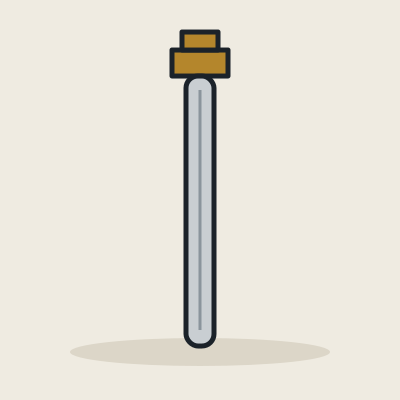
Magnesium anode rod
Best for: most soft and average water, when there is no odor problem
- Thread
- Usually 3/4 in NPT
- Lengths
- Commonly 34 to 44 in
- Wears
- Fastest of the three
- The rod many tanks ship with
- Wears quickly in softened water
- Can contribute to a sulfur smell in some water
-
02Odor fix
Aluminum zinc anode rod
Best for: hot water that smells like rotten eggs
- Thread
- Usually 3/4 in NPT
- Metal
- Aluminum with zinc
- Sold as
- Universal replacement
- Makers sell universal aluminum zinc rods as replacements (for example A. O. Smith’s listed universal rod)
- The common swap for a sulfur smell
- Pair it with a peroxide flush if the smell has built up
-
03Low ceiling

Flexible (segmented) anode rod
Best for: tanks with too little headroom to pull out or drop in a solid rod
- Thread
- 3/4 in NPT
- Lengths
- Commonly 42 to 44 in
- Metal
- Magnesium or aluminum
- Short segments on a wire bend through a tight gap
- Cut to length if your tank is shorter
- Same protection as a solid rod of the same metal
-
04No wear

Powered anode rod
Best for: odor problems and owners who never want to check a rod again
- Rod
- Titanium, does not wear away
- Power
- Plugs into an outlet
- Fit
- Check the tank size range
- Sends a small current to protect the tank instead of corroding
- Needs an outlet near the heater and stays plugged in
- Makers list the tank sizes each kit covers, for example 40 to 89 gallons
Length, thread and headroom
- Thread: most home tanks use 3/4 inch NPT. Check your manual.
- Length: match the old rod, or buy a longer one and cut it. Rheem sells its magnesium rods in 34-3/8 and 44 inch lengths, for example.
- Headroom: you need about the rod’s length above the tank to pull a solid rod straight up. Without it, a flexible rod is the answer.
- Combo anodes are built into the hot outlet nipple and are replaced as a unit with the nipple.
When to check it
Rheem suggests checking the anode annually (Rheem). The first check on a tank tells you how fast your water uses rods. Softened water, hard water and heavy use all speed it up. The step by step is in how to replace an anode rod.
What you need
Smell of rotten eggs? Read why the water smells before you buy a rod.
Questions people ask
How do I know if my anode rod needs replacing?
Pull it and look. Replace it when the core wire shows over several inches, when it is much thinner than its original 3/4 inch or so, or when it is caked in scale. Rheem says a rod that is worn or mostly coated with calcium needs replacing.
How often should I check the anode rod?
Rheem suggests checking it annually. Rods wear faster in softened or hard water and in heavily used tanks, so the first check tells you how often to look after that.
Magnesium or aluminum anode rod?
Magnesium is the usual choice for protection in most water. If your hot water smells of sulfur, an aluminum zinc rod is the common fix because the zinc helps reduce the reaction that makes the smell.
Where is the anode rod on my water heater?
On top of the tank. It is either under its own hex head plug, or built into the hot water outlet nipple (a combo anode). Your manual shows which.
What size socket removes an anode rod?
Sockets sold for the job are 1-1/16 inch six point. Old rods are often very tight, so use a breaker bar and hold the tank still.
Sources
Last reviewed October 29, 2026. Models, codes and listings change; check your heater’s manual and your local code, and follow the maker’s instructions.